

Understanding Varicose Veins
Varicose Veins are a common condition and can be helped through various medical and lifestyle interventions

What are Varicose Veins?
Varicose veins are dilated, tortuous veins under the skin in the legs. They are common, occurring in up to 30-40% of the population and are more common in women.
The visible veins can be unsightly and as a result affect self-esteem - may people who come and see us are conscious about showing their legs or wearing shorts or skirts.
Most varicose veins cause a degree of symptoms which vary in their severity. Interestingly, the size of the visible veins often doesn’t correlate with the symptoms experienced.
In more advanced cases of chronic venous insufficiency, complications can occur ranging from areas of skin discolouration, phlebitis, bleeding or venous leg ulcers.
Watch the video below to hear me discussing varicose veins, why people seek help for their veins and the treatments available
The key to understanding varicose veins is knowledge of the function of the valves in the veins and what happens when these valves fail
What causes Varicose Veins?
Varicose veins usually occur due to failure of the one way valves in the superficial veins in the leg. When healthy, these valves allow the return of blood from the legs towards the heart against gravity, helped by the squeezing action of the calf muscles when we walk. When we stand or sit still, the valves close to prevent the back-flow of blood back down the legs.
When the valves fail, blood returns the wrong way down the veins (reflux) which leads to high pressure in the veins of the legs. This increased pressure causes the progressive enlargement of the veins under the skin leading to visible varicose veins. It is also this increased pressure and congestion in the veins which leads to many of the symptoms and complications of varicose veins.

Veins can be found on any part of the leg but there are a number of commonly seen patterns that relate to which of the deeper veins are affected
Patterns of Veins
Varicose veins range in size from small veins that are only a few millimetres across to quite impressive sized veins. Whilst they can occur anywhere in the leg there are a number of areas where veins commonly appear and this often relates to which of the main superficial veins in the leg is affected.
The most frequently seen areas affected are shown below.
-
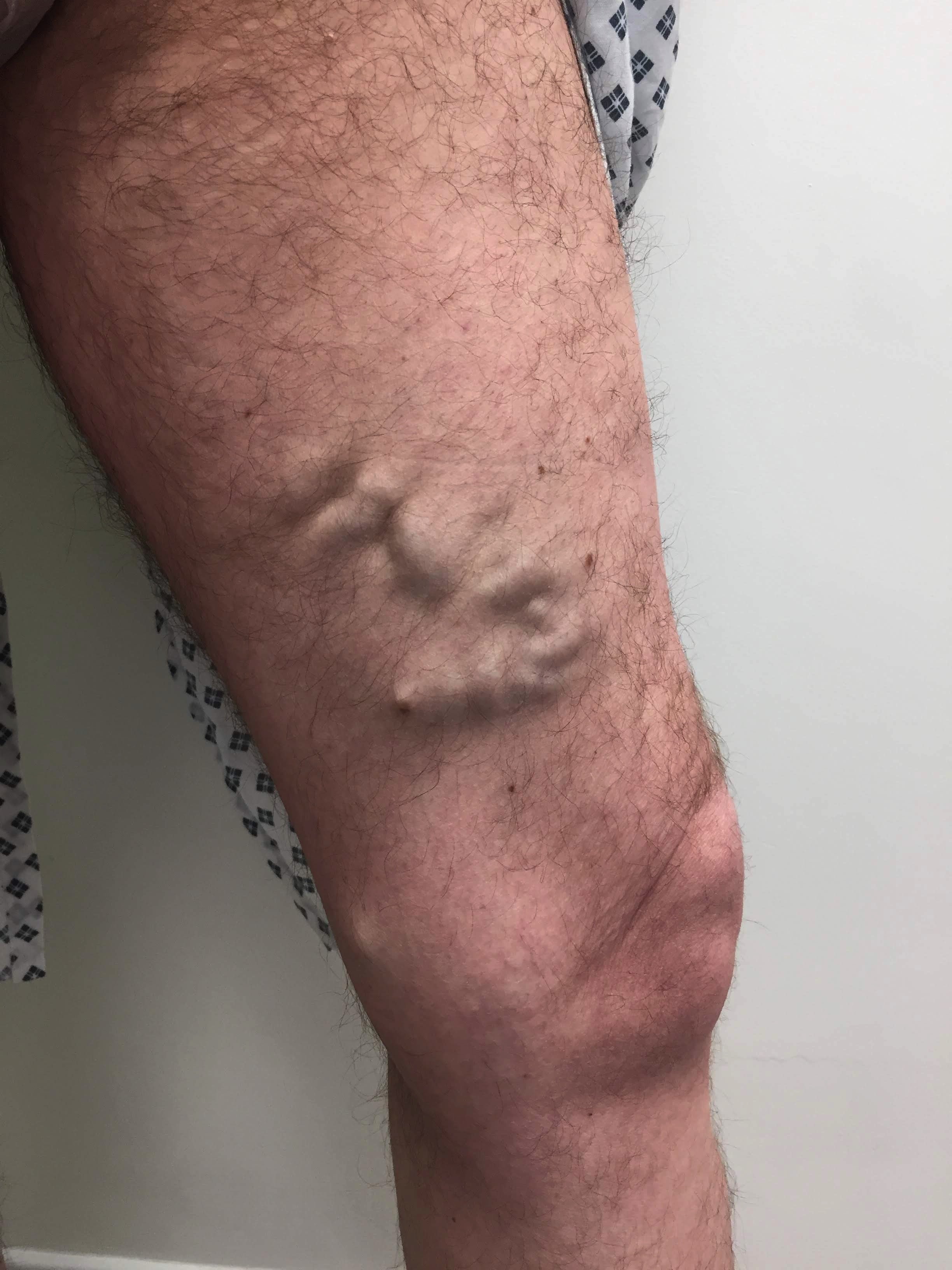
Inner thigh and calf veins
Veins on the inner aspect of the thigh and calf often relate to a problem with the great saphenous vein (GSV) which runs from the ankle, up the inner calf and thigh and drains into the deep veins in the groin.
-

Back of the calf
Veins that occur on the back of the calf often are caused by reflux in the short saphenous vein (SSV). This vein runs from the outer ankle, up the back of the calf and drains into the deep veins of the leg just above the knee crease.
-

Front of the thigh to outer knee
Veins that run from the front of the thigh to the outer aspect of the knee and outer calf often arise from the anterior saphenous veins (ASV) which runs up the front of the thigh to join the great saphenous vein as it drains into the main deep vein in the groin.
There are multiple causes for varicose veins and crossing your legs isn't one

Risk Factors for Varicose Veins
As discussed previously, varicose veins occur due to failure of the one-way valves in the deeper feeding veins. We don’t fully understand why valve failure occurs in some people but not others and indeed why some people only suffer from veins on one leg whilst others have them on both.
Click on the tabs below to learn more about some of the common risk factors for varicose veins.
-
It is clear that the tendency to develop varicose veins is hereditary. Most patients recall that someone in their close family, usually a parent or grandparent suffered from bad veins or even an ulcer. It is often the fear of ending up with similar problems that prompts patients to seek treatment themselves.
-
Pregnancy is a major risk factor for varicose veins in women. A study reported the prevalence of varicose veins in women with one, two, three, and four or more pregnancies as 38%, 43%, 48%, and 59%, respectively. Pregnancy increases blood volume and the baby in the womb presses on the veins, both of which causes venous distension. Hormonal changes during pregnancy also play a role in the development of varicose veins.
-
Obesity increases the risk of varicose veins by placing extra pressure on leg veins. People who are obese usually have a more sedentary lifestyle exacerbating this risk. Maintaining a healthy weight and staying active are key steps in reducing this risk.
-
The prevalence of varicose veins increases with age. In a study in which participants were divided into three age cohorts of 40, 50, and 60 year olds, the prevalence of varicose veins overall was 22%, 35%, and 41%, respectively
-
DVT may cause damage to the valves and dysfunction of the deep veins in the leg. In some cases, the DVT causes severe damage to the deep veins so that they become very narrowed of blocked. The consequence of this is increased pressure within the leg veins which leads to distension and varicose vein formation.
-
Studies have shown that prolonged standing and sitting and a sedentary lifestyle are risk factors for venous symptoms, including varicose veins. This is due to the poor calf muscle pump which is crucial for good flow of blood in the veins.
Venous Disease is a Chronic Problem
It’s important to understand that venous disease is a chronic condition.
While some individuals can manage their symptoms through lifestyle changes, such as wearing compression stockings, maintaining a healthy weight, and keeping active, others may need medical intervention. Common treatments include minimally invasive procedures such as radiofrequency ablation (RFA) or sclerotherapy to close off the affected veins, improving blood circulation.
Regular follow-up with a healthcare provider is recommended to monitor the condition and address any recurring issues. The need for future treatment depends on the severity of the condition and an individual’s specific circumstances.
